


Choosing an Air Purifier With a True HEPA Filter
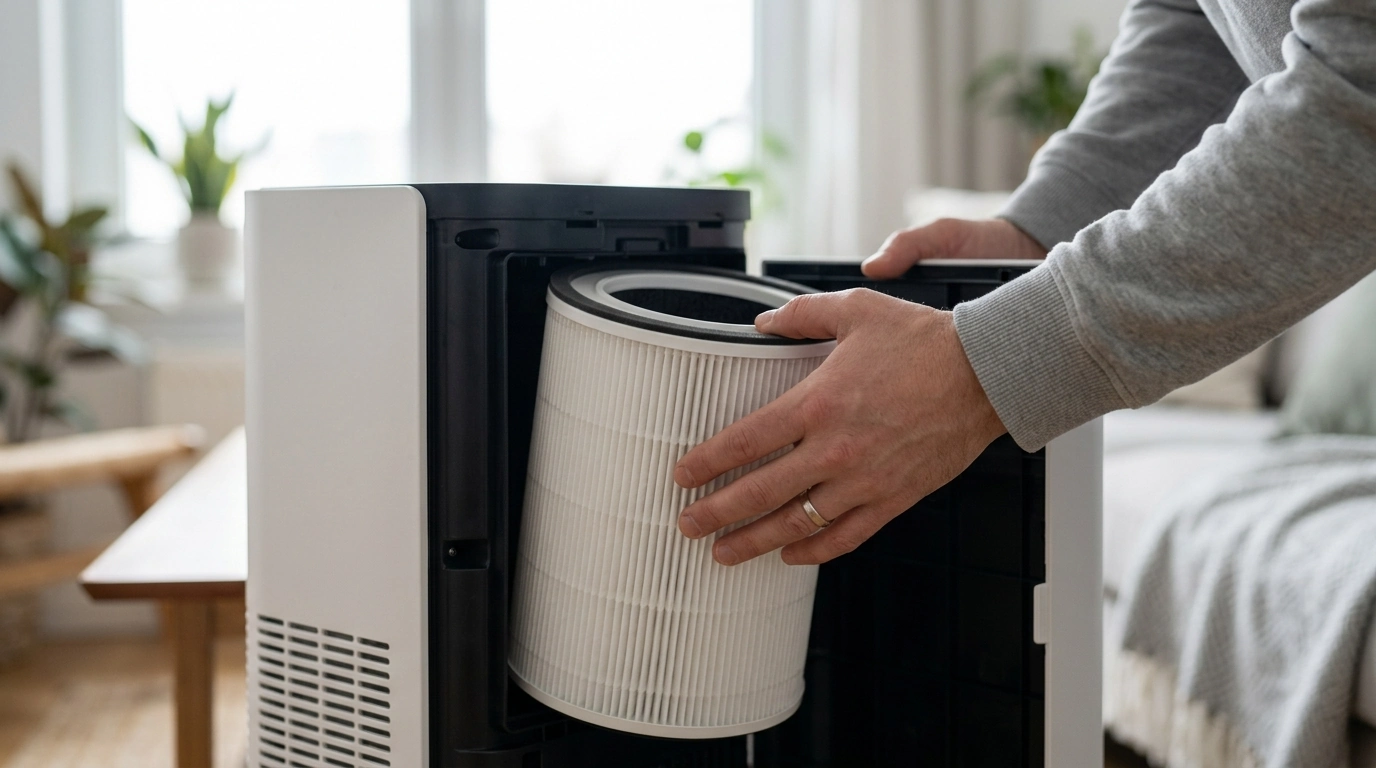
How to identify a true HEPA air purifier
Look for an air purifier whose product specifications explicitly say it uses a “True HEPA” or “HEPA” filter. A commonly cited benchmark for a true HEPA filter is capturing at least 99.97% of particles that are 0.3 microns in size. Terms such as “HEPA-like,” “HEPA-type,” or “high-efficiency” do not necessarily indicate that the filter meets this standard.
What should you check before choosing one?
Start with the filter details, not just the wording on the box. Confirm that the manufacturer identifies the included filter as true HEPA and provides a compatible replacement filter. Then consider how the purifier will work in your space:
- Room coverage: Choose a model rated for a room at least as large as the area where you plan to use it.
- Clean air delivery: Compare the CADR rating, when available, to gauge how quickly the purifier delivers filtered air.
- Filter replacement: Look for clear guidance on replacement timing and filter availability, and factor replacement costs into your choice.
- Sealed airflow: A well-sealed design helps direct air through the filter rather than around it.
A true HEPA filter can capture particles such as dust, pollen, and some airborne particles, but an air purifier is not a substitute for addressing pollution at its source or following health guidance. If you also want help comparing purifier features, visit our complete air purifier guide.
Is a true HEPA filter the only feature that matters?
No. A true HEPA filter is an important specification, but performance also depends on airflow, room size, filter condition, and how consistently you run the unit. A purifier that is too small for your room may clean the air less effectively, even if its filter meets the HEPA benchmark. Match the unit’s rated coverage to your space and follow the manufacturer’s care instructions.
FAQ
How often should you replace an air purifier filter?
Follow the replacement interval provided by the manufacturer, since timing varies by model, filter, and use. Replace the filter sooner if its condition or the purifier’s indicator calls for it.












Leave a comment