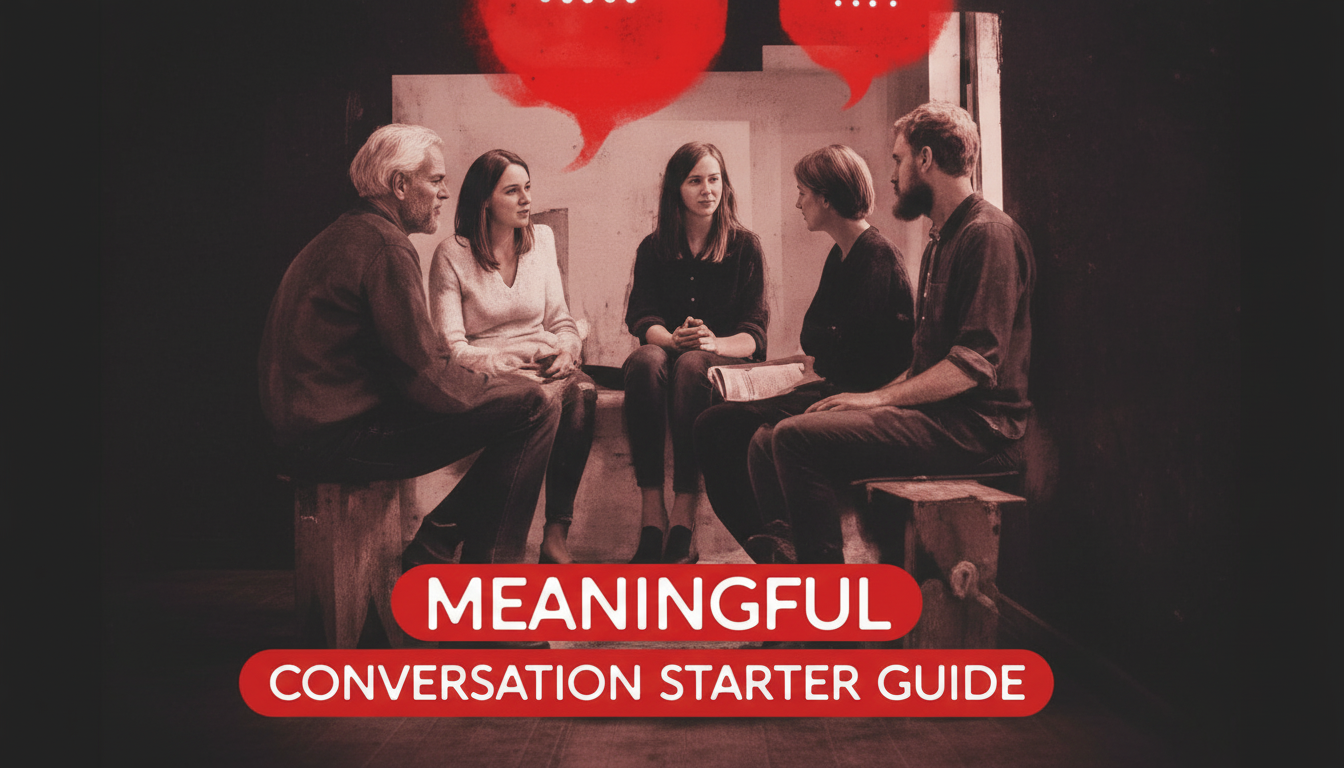
Small talk has its place, but meaningful connection usually starts when someone feels seen, safe, and genuinely heard. A printable conversation guide makes it easier to move from polite chat to real rapport—whether it’s a first date, a new friendship, or a professional introduction—without forcing intimacy or oversharing. The sections below share practical ways to choose the right tone, ask better questions, and keep conversations flowing naturally.
“Meaningful” doesn’t have to mean heavy. It usually means the conversation has enough depth to be memorable, while still feeling comfortable and respectful.
If you want a simple skill that instantly improves nearly any question, practice active listening—especially reflecting back what you heard before switching topics. A quick refresher on active listening can make even light conversation feel more connected.
A printable question set works best when it feels like a shared activity, not a script. The goal is to reduce pressure, not add performance.
| Situation | Best time to use deeper questions | Simple follow-up that feels natural |
|---|---|---|
| First date | After a few laughs and shared basics | “What made that moment stand out for you?” |
| New friendship | When you’ve found a shared interest | “How did you get into that originally?” |
| Networking event | After exchanging roles/goals | “What kind of work are you hoping to do more of this year?” |
| Long-distance chat | After a quick life update | “What’s been the most energizing part of your week?” |
Good dating questions create comfort and clarity at the same time: they’re warm enough to invite openness, but clear enough to reveal real compatibility.
If you’re meeting in person, confidence often comes from feeling comfortable in your own skin. For a simple, polished warm-weather option, consider pieces like Calvin Klein Jeans Women’s Blue Cotton Shorts – Spring/Summer Collection or Ichi Women’s Blue Cotton Skirt—easy staples that can help you focus more on the conversation than on adjusting your outfit.
Friendship grows through small, repeated moments of understanding. The best prompts aren’t dramatic; they’re genuine and specific.
Small talk can be a surprisingly useful bridge into these topics. For context on why it matters socially, see the American Psychological Association’s overview on the importance of small talk.
If you’re walking into a room feeling rusty, it can help to remember that light openers still have value. Harvard Business Review’s perspective on how to make small talk (and why it matters) offers a practical reminder: starting light is often what earns the right to go deeper later.
The Meaningful Conversation Starter Guide | Printable Guide for Dating, Friendship & Networking | Deep Questions & Prompt Examples is designed to make good conversations easier to start and simpler to sustain. Use it on paper or on your phone when you want helpful prompts without overthinking.
| Moment | Pick this style | Goal |
|---|---|---|
| Coffee date | Light → medium depth | Build comfort and curiosity |
| Dinner with a new friend | Medium depth with playful breaks | Find shared values and habits |
| Conference mixer | Professional curiosity questions | Make a memorable, low-pressure connection |
| Long car ride | Story-based questions | Create shared memories |
Offer a choice (“Want a fun question or a deeper one?”), keep it specific, and share a brief answer of your own. Story-based prompts paired with one gentle follow-up tend to feel natural instead of performative.
Start lighter, go one layer deeper only when the other person engages, and add an easy “pass” option. Using “What led to that?” instead of “Why?” also keeps the tone calm and nonjudgmental.
Yes—focus on motivation, craft, and goals, and keep the tone curious and respectful. Skip anything that feels like therapy, interrogation, or a shortcut to intimacy.











Leave a comment