


Men’s Quartz Chronograph Watch: Everyday Precision
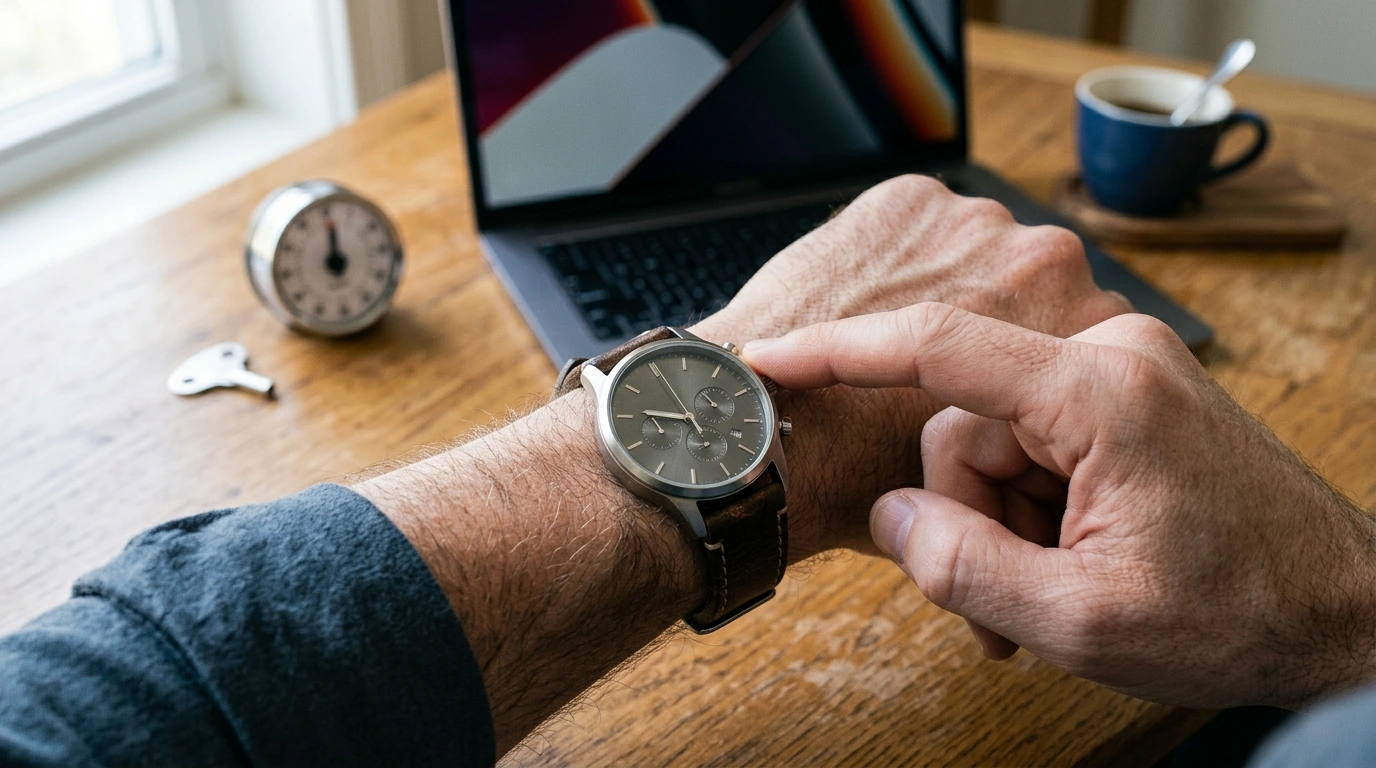
Men’s Quartz Chronograph Watch: Precision Timing with Everyday Versatility
A quartz chronograph blends dependable accuracy with stopwatch-style timing, making it a practical choice for workdays, travel, and weekend wear. The appeal is simple: you get steady, low-fuss timekeeping plus the ability to measure elapsed time on demand—without the learning curve or upkeep many people associate with more complicated watches. Below is a clear breakdown of what matters most—movement, chronograph usability, comfort, and care—so the watch feels as good on the wrist as it looks.
What a Quartz Chronograph Does (and Why It’s Useful)
At its core, a quartz watch uses a battery and a quartz crystal oscillator to keep time with consistent accuracy. That accuracy and stability are a big reason quartz remains a go-to for daily wear. For a deeper, general explanation of how quartz timekeeping works, references like Britannica’s overview of quartz watches are a helpful starting point.
A chronograph adds a stopwatch function—usually displayed with sub-dials or registers—so you can time real-life moments: a workout interval, a commute segment, a parking meter countdown, a cooking step, or even a presentation segment. Most models follow a familiar control scheme:
- Pushers to start/stop and reset the timing function
- Crown to set the time (and date, if included)
The best chronographs feel satisfying in use: pushers should be crisp and predictable, and the chronograph hand should snap back cleanly to zero when reset. Consistency matters—especially when timing becomes part of a routine.
Standout Features to Look For in Daily Wear
Two chronographs can look similar but feel very different in everyday use. Focus on the features that affect readability, comfort, and how often you’ll actually use the timing function.
- Dial legibility: High-contrast hands and markers make quick time checks effortless. Sub-dials should be easy to distinguish rather than visually “stacked” into the center.
- Chronograph layout: Check what each sub-dial tracks (minutes, hours, running seconds). A layout that matches how you time things—like minutes for cooking or hours for events—will feel more natural.
- Date window placement: A date is genuinely useful for office wear, but it shouldn’t interrupt at-a-glance time reading.
- Case comfort: Look for smooth edges and a balanced thickness. Even a great-looking watch can feel awkward if it catches cuffs or sits too tall.
- Strap or bracelet quality: A secure clasp/buckle and good adjustability keep the case stable and centered, which improves comfort during long days.
Precision timekeeping is also about standards and measurement. If you enjoy the “why” behind accurate time, NIST’s time and frequency resources offer an authoritative look at how time is maintained and measured.
Quick Comparison: Quartz Chronograph vs. Standard Quartz
A chronograph isn’t automatically “better”—it’s simply better suited to certain habits and style preferences. If you time tasks often (or you like the multi-register look), a chronograph earns its place on the wrist. If you want maximum simplicity and a slimmer profile, a standard quartz watch may fit more seamlessly into daily wear.
| Feature | Quartz Chronograph | Standard Quartz |
|---|---|---|
| Main benefit | Measures elapsed time with start/stop/reset | Simple, clean time display |
| Dial complexity | Moderate to high (sub-dials, scales) | Low (often time + date) |
| Ease of use | Requires learning pusher functions | Very straightforward |
| Typical case profile | Often thicker due to chronograph module | Often slimmer |
| Best for | Active schedules, timing tasks, sport-to-office styling | Minimalist everyday wear |
Fit, Style, and When It Looks Best
A men’s quartz chronograph is one of the easiest watches to dress up or down because it sits in the sweet spot between sporty and refined. A few styling choices make it feel intentional in any setting:
Care and Maintenance for Long-Term Reliability
Product Spotlight: Men’s Quartz Chronograph Watch
If the goal is a reliable, polished watch that can move from professional outfits to weekend wear, a dedicated everyday chronograph is a smart choice. Men’s Quartz Chronograph Watch is positioned as a versatile option with a premium look and practical timing capability, backed by quartz consistency and straightforward upkeep.
| Item | Details |
|---|---|
| Name | Men’s Quartz Chronograph Watch |
| Price | $355.67 |
| Availability | In stock |
| Product page | https://velourus.com/mens-quartz-chronograph-watch/ |
More In-Stock Picks to Consider
- Men’s Quartz Chronograph Watch — A daily chronograph option designed to look sharp in both professional and casual settings.
- AI Tools for Professional Editing Guide – Complete Digital Download for Writers, Editors, Content Creators, and Designers | SEO Writing, Visual Editing & Workflow Optimization — A practical digital resource for streamlining editing and content workflows.
FAQ
How do you use a quartz chronograph watch?
Most models use the top pusher to start and stop the chronograph and the bottom pusher to reset it. The crown sets the time (and date if included). For best operation, stop the chronograph before pressing reset, and note that sub-dial layouts can vary by watch.
Do quartz chronograph watches need a lot of maintenance?
Maintenance is typically minimal: periodic battery changes, basic cleaning, and sensible handling. If you rely on water resistance, having seals checked during servicing is a practical safeguard, especially after heavy wear or impacts.
Is a chronograph suitable for everyday wear?
Yes—many chronographs are designed specifically for daily use, offering durability and versatile styling from office to weekend. The main trade-off is that chronographs can be slightly thicker than simpler quartz watches, so fit and cuff comfort are worth checking.









Leave a comment