


Kids Bookshelf with Cubbies & Cabinets: Organize Fast
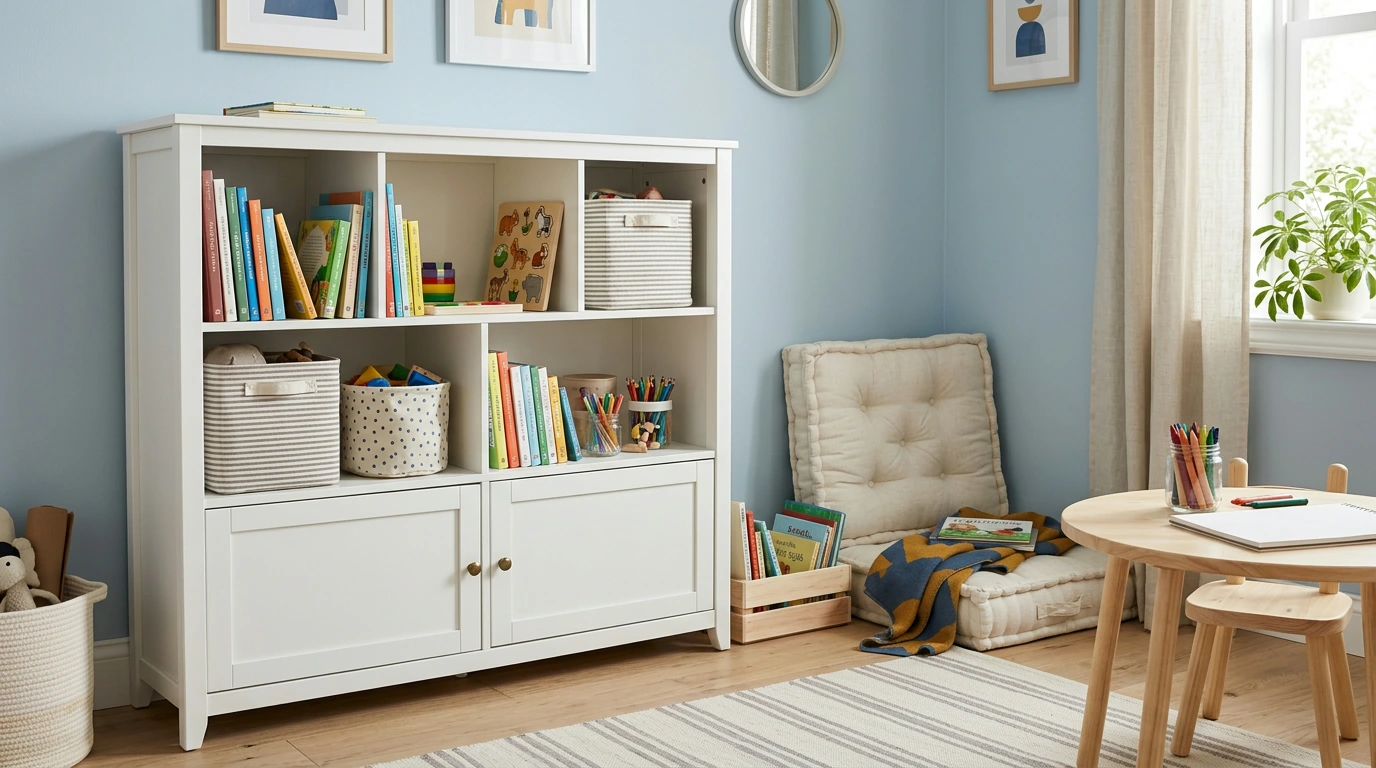
Kids Bookshelf with Cubbies and Cabinets: Easy-Access Storage for Books, Toys, and Art Supplies
A bookshelf that combines open cubbies with closed cabinets helps keep kids’ spaces both functional and calm: favorite books stay within reach, while messier items can be tucked away. The result is a room that supports independence during playtime and feels easier to “reset” at the end of the day.
Below are practical ways to plan what goes where, set up zones that make cleanup faster, and keep your storage unit safe for real-life family routines.
Why Cubbies Plus Cabinets Work So Well in Kids’ Rooms
Kids thrive when the room tells them what to do—where to grab things, where to put them back, and what “clean” looks like.
- Open cubbies encourage independence: kids can see labels, grab items, and return them without needing help.
- Closed cabinets reduce visual clutter: they act like a “reset button” for quick cleanups before bedtime or guests.
- Display plus storage supports rotation: keep a few favorites out and swap toys/books seasonally without buying more.
- Separated zones prevent pile-ups: reading, crafts, and building each get a clear home, so mess doesn’t migrate.
Storage Planning: What Goes in Cubbies vs. Cabinets
Before you start sorting, decide which items are truly “daily use” and which are better saved for supervised or occasional use. When kids can predict where things go, cleanup becomes a repeatable habit instead of a negotiation.
- Cubbies: best for daily-use items like picture books, board books, small bins, puzzles, and frequently used games.
- Cabinets: ideal for “adult-supervised” or occasional items like paint sets, small-piece kits, backup supplies, keepsakes, and seasonal books.
- Consistent bin sizing: matching bins reduce overfilling and make it obvious when a category is “full.”
- Sharing between siblings: assign a row or a side to each child to cut down on conflicts and missing pieces.
Cubbies vs. Cabinets: Quick Sorting Guide
| Storage area | Best for | Why it helps | Example items |
|---|---|---|---|
| Open cubbies | Everyday grab-and-go | Visible and accessible for kids | Storybooks, stuffed animals, puzzles, labeled bins |
| Lower cubbies | Heavier or larger items | Safer placement and easier lifting | Large board books, block sets, magnetic tiles in bins |
| Cabinets | Overflow and small-piece items | Reduces clutter and supports supervision | Art supplies, LEGO sets, extra notebooks, batteries (out of reach) |
| Top surface (if used) | Minimal display only | Prevents tipping risks from climbing | A small lamp, a framed photo (secured), a lightweight decor item |
Room Layout Ideas That Make Cleanup Faster
Placement matters as much as the storage itself. The faster a child can “close the loop” (use an item, then put it away), the more likely the habit sticks.
- Near the reading spot: placing the shelf close to the cozy chair/beanbag makes returning books feel like part of reading time.
- Crafts close to the table: keep paper, coloring books, and washable markers in cubbies; store glue, paint, and scissors in cabinets for younger kids.
- One-bin rules: one bin for cars, one for dolls, one for animals—so categories don’t overflow across cubbies.
- Simple labels at kid height: use words plus icons so pre-readers can participate without frustration.
Safety Checklist for Any Kids Storage Unit
Any freestanding storage in a child’s room should be treated like a climbable object. Build safety into the setup from day one, then keep it consistent.
- Anchor the unit: use the included anti-tip hardware or a compatible furniture strap system. The U.S. Consumer Product Safety Commission’s Anchor It! guidance is a helpful reference for tip-over prevention.
- Keep heavier items low: use lower cubbies for block sets, big books, and bulkier bins to lower the center of gravity.
- Don’t tempt climbing: avoid placing treats, screens, or favorite toys on top where kids may climb to reach them.
- Check pinch points and stability: look for smooth edges, a secure back panel, and doors that open/close cleanly.
For broader childproofing reminders beyond furniture anchoring, the American Academy of Pediatrics also shares practical home safety tips at HealthyChildren.org.
Materials, Finish, and Hardware: What to Prioritize
Kids’ furniture gets daily wear—sticky fingerprints, marker smudges, and plenty of bumps. Choosing the right materials upfront makes maintenance far easier.
- Wipeable surfaces: durable finishes make it easier to remove crayon marks and spilled snack residue.
- Solid structure: a stable back panel and secure shelf connections help reduce wobble over time.
- Kid-appropriate hardware: cabinet pulls should be easy for adults but not sharp or snag-prone for kids.
- Odor sensitivity: let new furniture air out in a ventilated room before full use, especially in smaller bedrooms.
Assembly and Setup Tips for a Stronger Build
A well-assembled unit feels sturdier, looks straighter, and holds up better through years of opening, closing, and bin-sliding.
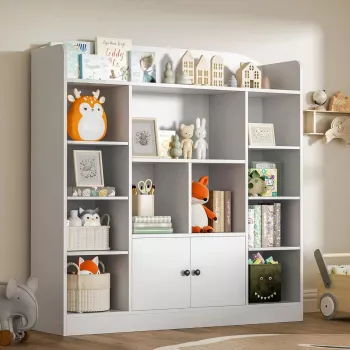
Featured Option: Kids Bookshelf with 11 Cubbies and 2 Cabinets
See the product details here: Kids Bookshelf with 11 Cubbies and 2 Cabinets.
Complementary Storage Idea for the Rest of the Home
If built-in closets feel tight, consider a storage-forward bed frame option like luxury-king-bed-with-massage-and-storage to reduce overflow in dressers and hallway bins.
Keeping It Looking Good: Daily Reset and Cleaning
FAQ
Should a kids bookshelf be anchored to the wall?
Yes—anchoring reduces tip-over risk. Use the included anti-tip hardware (or a compatible strap), keep heavier items in lower cubbies, and avoid putting tempting items on top.
What should be stored behind cabinet doors in a kids room?
Use cabinets for small pieces, messy craft supplies, backups, and anything that needs supervision. Closed doors also help the room feel calmer by hiding visual clutter.
How do you organize cubbies so kids actually put things back?
Give each cubby or bin one clear category, add simple labels (icons help), and avoid overfilling so items fit easily. When putting things away feels effortless, it happens more often.










Leave a comment