


Desktop UF Water Filter System: High-Efficiency Countertop
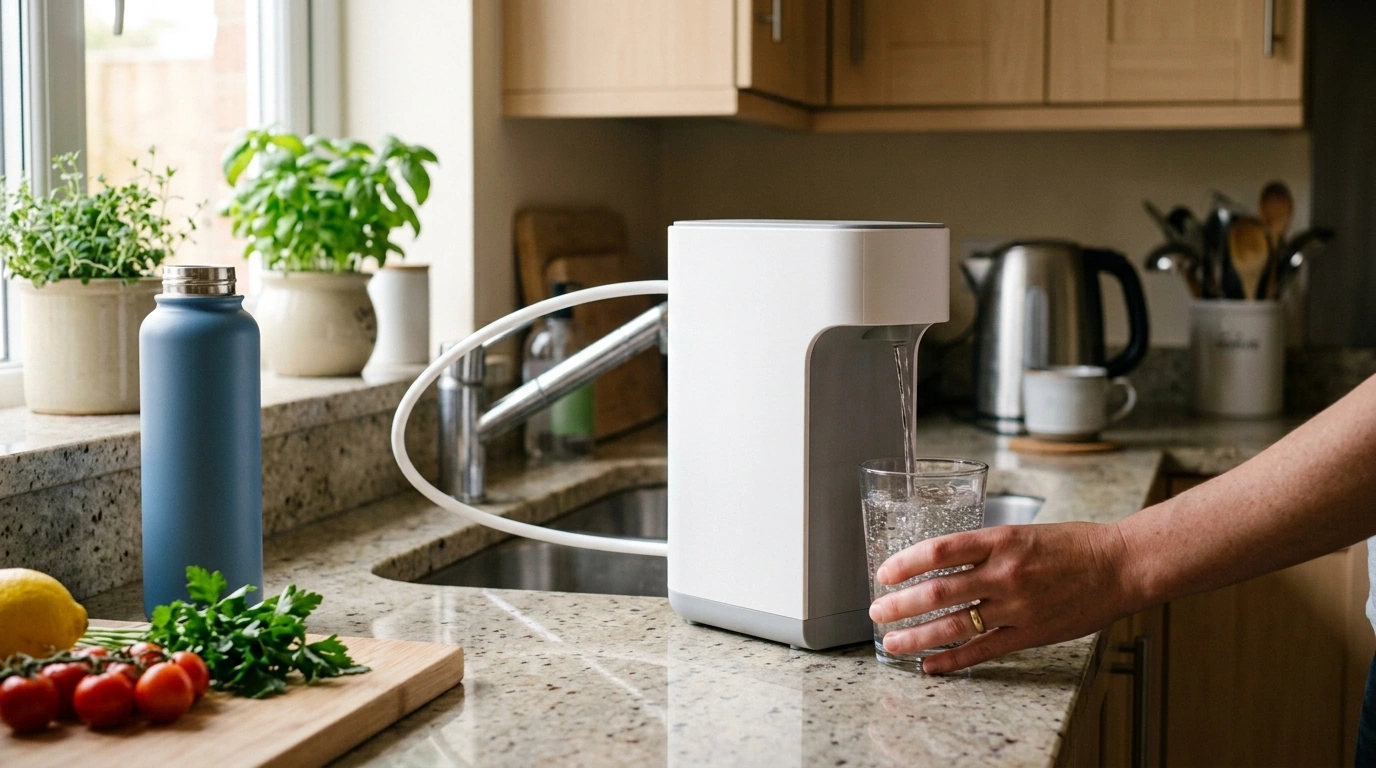
High-Efficiency Desktop UF Membrane Filter Water Purification System: Clean Water at the Countertop
A desktop ultrafiltration (UF) purifier is built for convenient, everyday drinking-water treatment without a permanent installation. Instead of committing to under-sink plumbing changes, a compact countertop unit can deliver clearer water on demand for cooking, kettles, bottles, and daily hydration. This guide breaks down how UF filtration works, what it can and can’t remove, where a desktop system fits best, and what maintenance habits keep performance steady over time.
What a Desktop UF Purifier Does (and Why It’s Different)
UF filtration relies on a membrane with extremely small pores that physically blocks many contaminants by size. In practice, this often means a noticeable reduction in turbidity (cloudiness), fine sediment, and rust particles—plus an added physical barrier against many microorganisms when the membrane rating and system integrity support it.
Because UF is primarily size-based filtration, it typically preserves dissolved minerals better than reverse osmosis (RO). Many people prefer that “mineral-forward” taste profile, especially for tea, coffee, and cooking.
Desktop UF systems are also designed around convenience: a smaller footprint, quick setup, and easy access for routine checks. They’re a strong fit when the main goals are improving clarity, reducing particulate matter, and adding an extra protective layer against certain microbes where appropriate. They are not a universal solution, though—some dissolved contaminants (such as certain heavy metals, nitrates, and specific chemical pollutants) may require carbon, ion exchange, RO, or other certified specialty filtration.
UF vs Other Common Home Filtration Approaches
| System type | Primary strengths | Common limitations | Typical best use |
|---|---|---|---|
| UF membrane (desktop/countertop) | Reduces turbidity and fine particles; can provide a physical barrier to many microorganisms; often retains minerals | Limited reduction of dissolved salts and some dissolved chemicals unless paired with carbon or other stages | Daily drinking-water improvement where installation space is limited |
| Activated carbon (pitcher/faucet/countertop) | Improves taste/odor; can reduce many organics and chlorine when properly designed | Not designed for all microbes or dissolved inorganic contaminants; performance varies widely by media and certification | Chlorine/chloramine taste issues, general aesthetic improvement |
| Reverse osmosis (under-sink) | Strong reduction of many dissolved contaminants and salts | Usually slower; produces wastewater; may remove beneficial minerals; often needs installation | Areas with high TDS or specific dissolved contaminant concerns |
| UV disinfection (add-on) | Inactivates many microorganisms when water is clear and system is sized correctly | Does not remove particles/chemicals; needs power and lamp maintenance | Microbial protection paired with effective pre-filtration |
Key Benefits to Look For in a High-Efficiency Desktop System
Not all countertop UF systems are built the same. A high-efficiency model focuses on consistent daily usability while keeping upkeep manageable.
- Steady flow for real kitchen tasks: Consistent output makes it easier to fill bottles, stock a kettle, or prep cooking water without long waits.
- Multi-stage protection (when included): Sediment pre-filtration plus activated carbon can protect the UF membrane and noticeably improve taste/odor.
- Low-fuss operation: Clear indicators, simple cartridge access, and straightforward startup steps reduce the odds of missed maintenance.
- Compact, stable housing: A sturdy base and sensible hose routing help prevent tip-over, strain on fittings, and countertop clutter.
- Food-grade wetted materials: Long-term drinking-water contact makes material quality and leak-resistant connections especially important.
- Quiet, practical energy use: Many UF systems run without power unless they use a pump or smart monitoring features.
Contaminants: What UF Can Address and What It May Not
For a grounded view of contaminant risk, it helps to reference public health guidance and testing/certification standards. The U.S. EPA overview of lead in drinking water is a useful starting point (EPA: Basic Information about Lead in Drinking Water). For filtration performance claims, look for independent testing and recognized standards (NSF: Drinking Water Treatment Units).
Setup and Daily Use on a Desk or Countertop
Maintenance: Filter Life, Membrane Care, and Performance Checks
Who This Desktop UF System Is Ideal For
Product Spotlight: High-Efficiency Desktop UF Membrane Filter Water Purification System
If your goal is everyday countertop access to clearer water, the High-Efficiency Desktop UF Membrane Filter Water Purification System is designed for desktop/countertop use where an under-sink install isn’t desired. UF-based filtration can support improved clarity by reducing fine particulates and turbidity, with real-world results shaped by source water conditions and on-time filter changes.
At-a-Glance
| Item | Details |
|---|---|
| Product | High-Efficiency Desktop UF Membrane Filter Water Purification System |
| Price | 1350.99 USD |
| Availability | In stock |
| Product page | View product |
To stay organized with maintenance intervals, filter change notes, and water-testing records, a lightweight documentation workflow can help. If you want a structured resource for editing and organizing household logs and checklists, consider AI Tools for Professional Editing Guide – Complete Digital Download.
FAQ
Does a UF membrane purifier remove viruses?
Virus removal varies by membrane pore size and the system’s overall integrity, so it shouldn’t be assumed without certified performance data. If viral protection is a requirement, look for tested claims and consider pairing filtration with a properly sized UV stage or other validated disinfection method.
Will a desktop UF system remove chlorine taste and odor?
Chlorine taste and odor reduction is typically handled by activated carbon, not the UF membrane itself. Check whether the unit includes a carbon stage and replace that cartridge on schedule to keep results consistent.
How often do filters need to be replaced in a countertop UF purifier?
Replacement timing depends on your water quality and daily volume, but pre-filters usually need changes more often than the UF membrane. Slower flow, returning cloudiness, or new taste/odor changes are common signs it’s time to service the system, and the manufacturer’s intervals should be the final guide.













Leave a comment