


Curved Furniture Layout Guide: Spacing Rules by Room

Styling with Curved Furniture: Layout Ideas, Spacing Rules, and Room-by-Room Setups
Curved sofas, rounded chairs, arched headboards, and circular tables soften hard angles and create an easy sense of flow. The difference comes down to placement: when curves are grounded, repeated, and given proper breathing room, they look intentional—whether the room is compact, open-plan, modern, or classic. For more guidance, see [PDF] INTERIOR DESIGN STYLE GUIDE TIPS AND TRICKS.
Why curved furniture changes the feel of a room
Curves calm down boxy architecture. In spaces filled with right angles—walls, windows, cabinetry—rounded silhouettes add a softer rhythm that feels welcoming without requiring bold color or pattern. They also guide movement: a gentle arc naturally encourages circulation paths instead of creating visual “dead-ends.” For further reading, see [PDF] USER GUIDE FOR INTERIOR DESIGN STEP BY STEP.
Another advantage is flexibility with style mixing. Curved forms tend to bridge aesthetics—modern with vintage, minimalist with glam—because shape becomes the unifying element. For more layout inspiration and real-home examples, sources like Architectural Digest and Houzz show how often a single curved piece becomes the room’s focal moment.
Quick placement rules that prevent the “floating curve” problem
The most common issue with curved pieces is that they can look like they’re drifting—especially in open layouts. Use these fast rules to keep the arrangement grounded and balanced:
- Anchor with a rug: choose a rug large enough that at least the front legs of your main seating sit on it.
- Match one curve with one straight: pair a curved sofa with a rectangular coffee table (or the reverse) to keep the composition stable.
- Leave consistent breathing room: protect walkways so the curve reads as deliberate, not cramped.
- Repeat the shape at least once: echo the curve with a round side table, arched mirror, or rounded lamp shade for cohesion.
Comfortable spacing targets for curved furniture layouts
| Layout detail | Recommended distance | Notes |
|---|---|---|
| Main walkway behind/through seating | 30–36 in (76–91 cm) | Use the higher end in busy paths or open plans |
| Coffee table to sofa edge | 14–18 in (36–46 cm) | Tighten for small rooms; expand for deeper seats |
| Chair to side table reach | 2–6 in (5–15 cm) | Keep close so the curve still feels continuous |
| Dining chair clearance from table edge to wall | 36–44 in (91–112 cm) | Allows pull-out plus pass-behind circulation |
| Bedside clearance next to rounded bed frame | 24–30 in (61–76 cm) | Maintains an easy route without crowding the curve |
If you’re comparing seating sizes before you commit, basic dimension guidelines help you avoid crowding; The Spruce’s sofa dimensions guide is a useful reference point.
Living room layouts that flatter curved sofas and chairs
- Conversation arc: place a curved sofa facing two accent chairs. Keep the coffee table centered and slightly rectangular to “square up” the arrangement.
- Perimeter sweep: curve a sofa along a window wall, then add a round ottoman that can float for a footrest or extra seating.
- Corner rescue: use a rounded chair or petite loveseat to soften a sharp corner; finish with a tall plant or floor lamp behind it to complete the vignette.
- TV rooms: angle the curve so the center seat faces the screen. Avoid pushing the sofa perfectly flat to the wall unless the room is narrow.
- Open-plan zoning: let the curved back act as a “soft divider” between lounge and dining. Align the sofa with the edge of the rug to make the zone look intentional.
For a step-by-step approach you can use while arranging furniture, the Styling with Curved Furniture | Interior Styling Guide | Digital Download Home Decor Layout Tips | Curved Furniture Placement eBook is an easy reference for spacing, zone planning, and repeatable layout templates.
Dining areas: round tables, curved banquettes, and better traffic flow
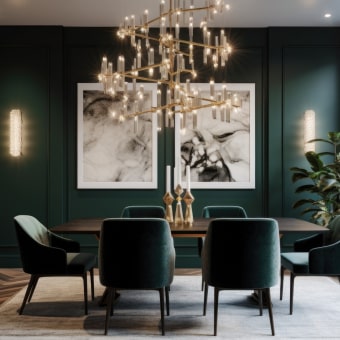
To emphasize a rounded dining setup, a sculptural chandelier can “finish” the curve from above. Consider the Art Deco crystal branch chandelier for a dining room focal point to create a clean centerline over a round table or curved banquette.
Bedroom styling with rounded silhouettes
If a bedroom feels boxy, a curved-profile bed becomes the “hero curve” that sets the tone. For a statement centerpiece, the luxury king bed with massage and storage can anchor the room while keeping the overall silhouette plush and streamlined.
Entryways and corners: using curves as a soft landing
Styling formulas: texture, color, and accessories that make curves look intentional
Common mistakes and quick fixes
A ready-to-use reference for curved furniture placement
FAQ
How much space should be left around a curved sofa?
Aim for 30–36 inches for main walkways and 14–18 inches between the sofa edge and the coffee table. In small rooms, slightly tighter clearances can work as long as circulation still feels easy and uninterrupted.
Do curved sofas work in small living rooms?
Yes—compact curved sofas can improve flow because there are no sharp corners to catch on. Anchor the seating with an appropriately sized rug, keep one straight-edged piece for contrast, and avoid oversized coffee tables that crowd the arc.
What coffee table shape looks best with curved seating?
Rectangular or oval tables usually balance curved seating best by adding a clean counterline. Round coffee tables can work too if the room has enough breathing room and there’s at least one straight element elsewhere, like a console or media unit.












Leave a comment