


Quartz vs. Chronograph: Which Watch Fits Your Routine?
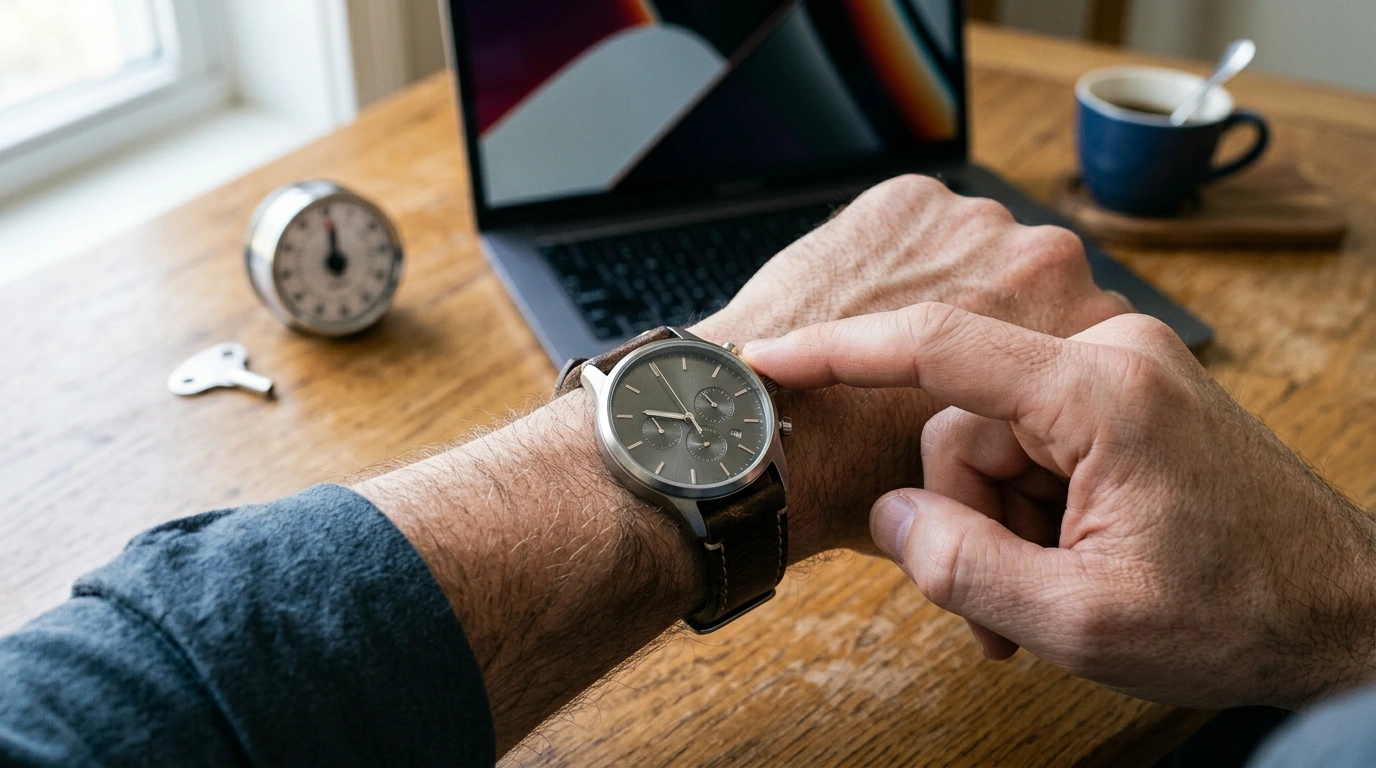
Which is better for me, a chronograph or a quartz watch?
A chronograph and a quartz watch describe different things, so you may not have to choose between them. Quartz refers to how a watch keeps time; a chronograph is a stopwatch feature. Many chronographs use quartz movements, giving you both dependable timekeeping and a built-in timer.
Choose a standard quartz watch for simple everyday wear
If you mainly want to check the time, a time-only quartz watch is a straightforward choice. It typically has a clean dial that’s easy to read at a glance, and it runs on a battery-powered movement. Quartz is a practical fit for daily routines when you value convenience and don’t need to measure elapsed time.
Choose a chronograph if you’ll use the timer
A chronograph lets you start, stop, and reset a stopwatch function using buttons on the case. It can be useful for timing a workout, a cooking interval, or another activity. The extra subdials and pushers give the watch a more technical look, but they can make the display busier than a simple quartz model.
Can you get both features in one watch?
Yes. A quartz chronograph combines a quartz movement with a stopwatch function. This is a good option if you want quartz timekeeping and expect to use the timer. If you won’t use the chronograph, choosing a simpler quartz watch can keep the dial and controls less complex.
What should guide your decision?
Start with how you’ll wear the watch. For an easy-to-read daily option, prioritize a clear dial and simple controls. If timing is part of your routine, look for a chronograph with legible subdials and pushers you can operate comfortably. Also consider whether you prefer a minimal or more detailed appearance; the feature is only worthwhile if it suits your habits.
For a closer look at quartz chronographs and everyday precision, read our guide to men’s quartz chronograph watches.
FAQ
How do you use a chronograph watch?
Press the start/stop pusher to begin timing, press it again to stop, then use the reset pusher to return the chronograph hands to zero. The exact pusher layout can vary by watch.












Leave a comment