


Metal Desktop Bookshelf & File Organizer for Tidy Desks
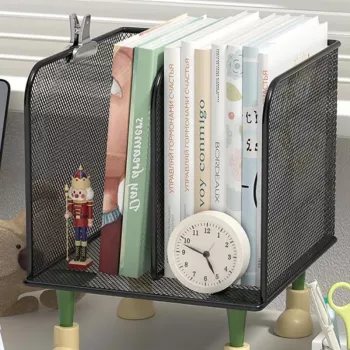
Metal Desktop Bookshelf and File Organizer for a Clear, Focused Work Surface
A crowded desktop makes it harder to find notes, keep papers flat, and stay focused during study or work. A metal desktop bookshelf and file organizer creates vertical storage right where it’s needed—keeping books, folders, notebooks, and daily essentials separated and easy to grab. The sturdy metal frame helps prevent wobble under weight, while open shelves make it simple to sort items by project or priority. Whether setting up a home office, a student desk, or a shared workspace, a compact desk rack can turn a messy pile into a clean system that’s quick to maintain.
What This Desktop Rack Helps Organize
A desktop bookshelf and file organizer is most useful when it replaces “horizontal clutter” (piles) with “vertical clarity” (categories). With a few simple zones, the rack can become the home base for active work without swallowing your entire desk.
- Books and textbooks: store upright to reduce bending spines and prevent stacked “book towers.”
- Folders and files: keep active documents separated from reference material so paperwork doesn’t sprawl across the desk.
- Notebooks, planners, and binders: assign one shelf for daily use and another for long-term projects.
- Tech accessories: create a dedicated spot for chargers, small hubs, external drives, or headphones to avoid tangles.
- Desk essentials: reserve a shelf for sticky notes, stapler, tape, and pens so the desktop stays open for writing.
For most desks, the biggest win is keeping “today’s items” visible while preventing “someday items” from creeping back onto the main work surface.
Why a Metal Desktop Bookshelf Feels More Stable Day to Day
Stability is the difference between an organizer you keep using and one you slowly abandon. Metal racks tend to feel more dependable when they’re loaded with heavier items like binders, thick textbooks, or stacked folders.
- Rigid structure: metal frames resist flexing when loaded with books or binders.
- Better weight handling: helps prevent sagging common in lightweight organizers.
- Easy cleaning: wipe down quickly; less worry about water rings from a damp cloth.
- Long-term appearance: metal finishes typically show less warping than many wood composites.
- Good fit for busy desks: stable storage is especially useful when the rack is moved slightly to clean or rearrange cables.
If your setup includes a monitor, keyboard, and a narrow writing lane, stability matters even more—bumping a wobbly rack can send paper edges curling or knock a stack into your workspace. For comfort and posture, it also helps to keep frequently used items within easy reach; workstation ergonomics guidance from OSHA’s Computer Workstations eTool and Cornell University Ergonomics supports arranging tools so you’re not constantly twisting or overreaching.
Simple Setup Ideas for Work, Study, and Small Spaces
The simplest organizing systems are the ones you can maintain in under a minute. These layouts keep your “active work” close while limiting the temptation to create new piles.
- Home office layout: place the rack on the non-dominant side so the main writing zone stays clear.
- Student desk layout: keep textbooks on the lower area and notebooks/planner on the upper area for quick swaps.
- Shared workspace: dedicate each shelf to a person or category (incoming paperwork, to-review, completed).
- Printer station: position next to a compact printer to hold paper reams, envelopes, and labeled file folders.
- Visual “project lanes”: assign one shelf per project to reduce context switching and misplaced pages.
Quick Comparison: Desk Organization Options
| Option | Best for | Trade-offs |
|---|---|---|
| Desktop bookshelf/file rack | Books + folders kept upright; clear writing space | Needs a bit of vertical clearance |
| Stacking paper trays | High-volume paper flow (inbox/outbox) | Less helpful for books; can become tall stacks |
| Drawer organizer | Small tools and supplies | Doesn’t solve book/paper clutter on the surface |
| Wall shelf | Freeing the entire desktop | Requires mounting; less flexible to reposition |
Care, Safety, and Desk Placement Tips
When the organizer becomes the “default parking spot” for active materials, it reduces repeated bending, reaching, and rummaging—small friction points that can add up during long work sessions. For general background on ergonomic risks and prevention, the National Institutes of Health (NIH) Bookshelf includes research-based resources on ergonomics and musculoskeletal health.
Featured Option: Metal Desktop Bookshelf and File Organizer
If your desk is currently a mix of stacked textbooks, sliding folders, and half-finished notes, a compact metal rack can create an instant “active work” station. The Metal Desktop Bookshelf and File Organizer – Sturdy Office & Study Desk Rack is designed to keep books, folders, and daily materials visible and accessible on a small footprint, with sturdy metal construction suited for frequent use.
For writers, students, and content-focused work, pairing a tidy desk with a clearer editing workflow can be a helpful upgrade. For optional support on the digital side, consider the AI Tools for Professional Editing Guide – Complete Digital Download as a companion resource to streamline drafting and revision once your workspace is under control.
FAQ
How much weight can a desktop bookshelf and file organizer hold?
Weight capacity varies by design and construction, so it’s best to follow any listed limits from the seller or manufacturer. As a general practice, place heavier textbooks and binders on the lowest shelf area and avoid overhanging items that shift the center of gravity.
Will a metal desk rack scratch my desktop?
It can, especially on softer finishes or when dust and grit get trapped under the feet. Adding adhesive pads, thin felt, or a desk mat underneath the contact points and wiping the surface regularly helps prevent scuffs.
What’s the easiest way to keep papers from piling up again?
Use a simple three-zone flow—“inbox,” “to-do,” and “done”—with folders or labeled sections on the rack. Do a quick end-of-day reset and archive or file anything that isn’t actively needed at least once a week.













Leave a comment