


New Kitten Feeding Guide: First Foods, Schedule & Tips
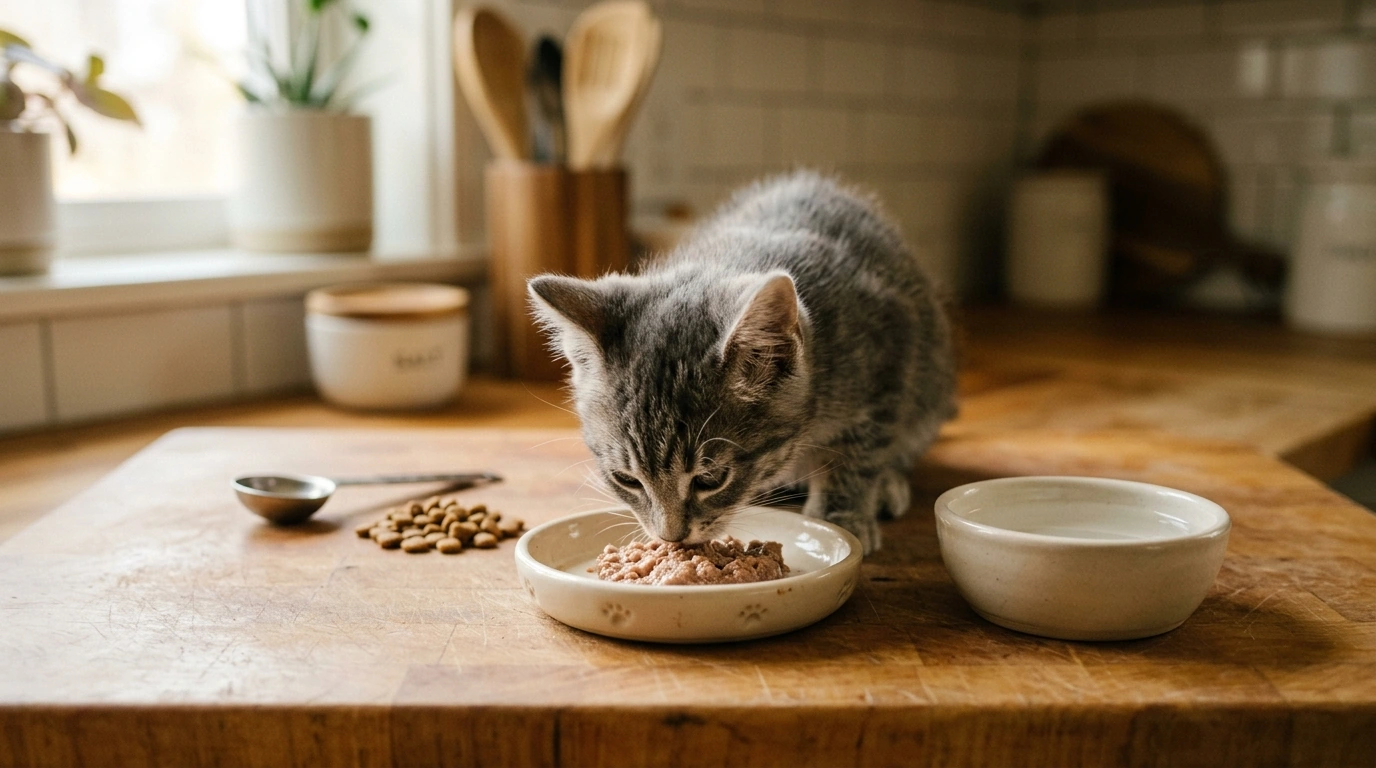
Feeding Your New Kitten Right: What to Start With for Healthy Growth and Calm Mealtimes
A new kitten’s first weeks at home are a rapid-growth window where the right food, portions, and routine can shape digestion, energy, and body condition. The goal is simple: choose a complete growth diet, feed it consistently in small, predictable meals, and make changes slowly. With a little structure, mealtimes stay steady (and far less messy) while your kitten grows into a healthy adult.
What Makes Kitten Nutrition Different From Adult Cat Nutrition
Kittens aren’t “small cats” nutritionally. They need more calories per pound because growth and play burn energy fast, and their stomachs are tiny—so meal frequency matters as much as the day’s total amount.
Look for foods labeled “complete and balanced for growth” (or “all life stages”) and formulated to meet recognized standards such as AAFCO nutrient profiles. That statement on the label is a practical baseline because kittens need higher protein and fat to support lean muscle, developing organs, and brain/eye health.
Key nutrients that matter during growth include taurine (heart/vision), DHA (brain/eyes), arachidonic acid (essential fatty acid for cats), and the right calcium-to-phosphorus balance for bones and teeth. For more background on evaluating pet foods, see the WSAVA Global Nutrition Guidelines and AAFCO’s consumer guidance on pet food.
Treats and toppers should stay truly supplemental. When extras crowd out balanced meals, nutrient gaps can show up in coat quality, stool inconsistency, or uneven growth.
What Food to Start a New Kitten On
The smoothest start is usually the most boring one: begin with the same food your kitten was eating before coming home, if you can. Keeping the brand and formula consistent for several days reduces digestive surprises while your kitten adjusts to a new environment.
After that, choose a kitten formula in the format that works for your household:
- Wet food: Adds hydration and tends to be easier for young kittens to chew. It’s also helpful for kittens that don’t drink much water yet.
- Dry food: Convenient, easy to measure, and can make it simpler to hit consistent daily calories.
- Mixed feeding: A common middle ground—wet meals for hydration plus measured dry food for easy portioning.
Avoid unbalanced homemade diets unless they’re formulated by a veterinary nutrition professional. Kittens are sensitive to nutrient imbalances, and “close enough” can still interfere with healthy bone development. Also skip cow’s milk as a “treat”—many kittens are lactose intolerant and can develop diarrhea.
Optional help for building a simple routine
If you want a step-by-step plan (starter foods, transition pacing, portion checks, and troubleshooting for picky phases), see Feeding Your New Kitten Right: Essential Kitten Nutrition eBook. For households that like to keep digital notes and checklists in one place, AI Tools for Professional Editing Guide – Complete Digital Download can also be used to organize feeding logs, vet questions, and weekly weight tracking.
Age-by-Age Feeding Schedule and Portions
Start with the feeding chart on your kitten food label, then adjust based on body condition, energy level, and stool quality. Needs can change quickly during growth spurts, so a “perfect” portion in week one may be too little (or too much) a few weeks later.
If your kitten’s exact age is uncertain—common with rescues—ask your veterinarian for guidance. Very young kittens may need softer textures and more frequent meals than you’d expect, especially under about 8 weeks.
| Kitten age | Meals per day | Texture focus | Practical notes |
|---|---|---|---|
| 6–8 weeks | 4–6 small meals | Soft/wet or moistened | Prioritize easy eating and stable stools; avoid abrupt changes. |
| 8–12 weeks | 4 meals | Wet + optional measured dry | Use routine feeding times; introduce puzzle feeders gently. |
| 3–6 months | 3 meals | Wet and/or dry | Adjust amounts for growth spurts; keep treats minimal. |
| 6–12 months | 2–3 meals | Adult-like textures | Discuss transition timing to adult food with a veterinarian (often around 12 months). |
Weigh your kitten weekly using the same scale at a similar time of day. Steady gain is the target—without developing a consistently pudgy layer of belly fat. If you free-feed dry food, still measure the total daily amount so “a little extra” doesn’t quietly become overfeeding.
How to Switch Foods Without Upset Stomachs
Common Feeding Pitfalls (and Simple Fixes)
Supporting Healthy Growth Beyond the Bowl
A Practical Guide for Confident, Stress-Free Kitten Feeding
When mealtimes feel unpredictable, the fix is usually a clearer routine: an age-appropriate schedule, measured daily portions, and slow transitions. If you want a structured walkthrough—label-reading basics, transition checklists, hydration tips, and troubleshooting—visit Feeding Your New Kitten Right: Essential Kitten Nutrition eBook.
FAQ
Should a new kitten eat wet food, dry food, or both?
Any of the three options can work as long as the diet is complete and balanced for growth. Wet food supports hydration and easy chewing, dry food is convenient and easy to measure, and many households use a mixed plan with consistent portions.
How often should a kitten eat each day?
Younger kittens do best with multiple small meals (often 4 or more), then taper to about 2–3 meals per day by later kittenhood. Adjust based on your food label guidance, weekly weight trends, and your kitten’s body condition.
How can food be changed without causing diarrhea?
Switch gradually over 7–10 days by increasing the proportion of the new food in steps, slowing down if stools soften. Keep treats and extras stable during the transition, and contact a veterinarian if there’s watery diarrhea, repeated vomiting, blood/mucus, lethargy, or no eating for over 24 hours.
















Leave a comment