


Magnetic Building Tiles With Cars: Ramps, Roads, Play
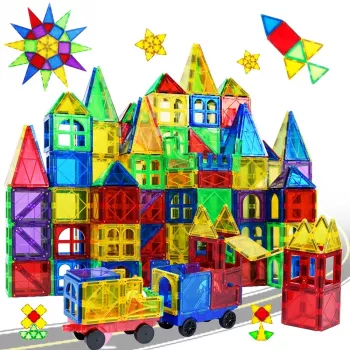
Magnetic Building Tiles with Cars
Magnetic tiles paired with vehicle pieces turn building time into moving, story-driven play. Kids can build a quick ramp in minutes, send a car flying, and then rebuild for a brand-new “test track” without a big mess of loose blocks. Over longer play sessions, the same pieces can become bridges, garages, tunnels, and full mini cities—making it a flexible option for solo play, sibling play, or collaborative “let’s build a town” afternoons.
What Makes Tile-and-Car Sets So Engaging
Magnetic tile play is satisfying on its own, but adding cars introduces a repeatable challenge loop that keeps kids coming back. Instead of building once and walking away, children naturally cycle through building, testing, and improving—like a hands-on version of “try it, tweak it, try again.”
- Build-and-drive play loop: construct a structure, test a car run, then redesign for a new challenge.
- Easy connections: magnets make it simple to rebuild quickly after bumps, crashes, or big “demolitions.”
- Great for different play styles: works for independent play, sibling play, or cooperative “build a town together” sessions.
- Pairs naturally with pretend play: garages, bridges, tunnels, parking decks, and rescue scenes come to life with vehicles.
What to Look For in a Magnetic Tile Set With Cars
Not all tile sets feel the same in real use—especially once ramps and moving cars are involved. A few details make the difference between a set that gets played with weekly and one that gets frustrating fast.
- Strong, consistent magnet pull: helps walls stay upright and supports taller builds without constant collapsing.
- Smooth edges and durable seams: important for repeated drops, stacking, and fast “rebuild” sessions.
- Car-friendly pieces: ramps, bases, or road-style tiles can make rolling smoother and more predictable.
- Compatibility: check whether the size/connection style matches tiles you already own.
- Variety for progression: basic shapes for beginners plus specialty pieces to keep older kids challenged.
Quick Checklist Before Buying
| Feature | Why It Matters | What to Check |
|---|---|---|
| Magnet strength | Prevents collapsing towers and sagging bridges | Tiles hold when lifted and gently shaken |
| Build variety | Keeps play fresh over time | Mix of squares/triangles plus ramps or bases for cars |
| Safety finish | Reduces risk from rough edges or weak seams | Smooth corners, securely enclosed magnets |
| Storage | Faster cleanup and fewer lost pieces | Box/bag included or fits standard bins |
| Age fit | Better success and safer play | Matches child’s motor skills and supervision level |
Play Ideas: Roads, Ramps, and Mini Cities
When kids aren’t sure what to build next, a few simple “challenges” can spark fresh ideas without turning play into a rigid lesson. These activities also scale well: younger kids can build small, while older kids can add length, height, and rules.
- Ramp test: build three ramps at different angles and see which one makes the car roll farthest.
- Bridge challenge: span between two stacks and reinforce the center so it doesn’t dip.
- Parking garage: create levels with “entrance” and “exit” lanes and add a rooftop helipad-style platform.
- Tunnel run: build an archway tunnel and widen it until cars pass through without bumping.
- Color-and-route game: assign each color a destination and drive cars only on matching tiles.
Skills Supported During Play
Tile-and-car play is fun because it’s active and responsive—kids see immediate results when they change an angle, widen a tunnel, or reinforce a bridge. That immediate feedback naturally builds important early skills.
- Fine-motor control: aligning edges, rotating shapes, and stabilizing tall builds.
- Early engineering thinking: testing, failing, rebuilding, and improving supports.
- Spatial reasoning: turning 2D layouts into 3D structures and drivable routes.
- Language and storytelling: naming buildings, assigning roles to cars, and describing “missions.”
- Social skills: turn-taking, planning together, and sharing limited pieces during cooperative builds.
Safety and Age Guidance
Magnetic tile sets are designed for play, but responsible use matters—especially when magnets and small accessories are involved. For broader toy safety guidance, review recommendations from the American Academy of Pediatrics and consult general magnet safety information from the U.S. Consumer Product Safety Commission.
- Choose age-appropriate sets and provide supervision, especially for younger children and siblings.
- Inspect tiles regularly for cracks, loose seams, or damage; stop use if magnets could be exposed.
- Store away from very young children if the set includes small vehicle parts or accessories.
- Keep magnets away from electronics and medical devices as a general household safety practice.
- Follow the manufacturer’s care instructions for cleaning and maintenance.
Keeping the Set Organized
Product Options (In Stock)
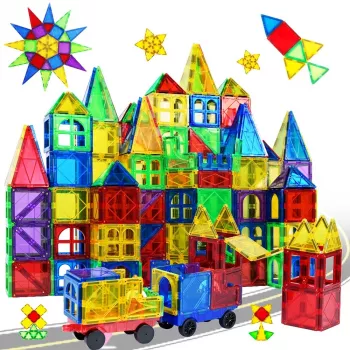
If you want a set that combines building and vehicle play in one box, Magnetic Building Tiles with Cars is a ready-to-gift option designed for quick ramps, bigger builds, and story-driven scenes. It can work as a core set or as an add-on to expand an existing magnetic tile collection.
For adults who create classroom handouts, activity directions, or printable play prompts to go with toys, AI Tools for Professional Editing Guide – Complete Digital Download is an in-stock digital resource focused on editing and workflow support.
FAQ
Are magnetic building tiles safe for kids?
They can be safe when used as intended with age-appropriate supervision. Regularly inspect tiles for cracks or compromised seams, and remove any damaged pieces immediately since exposed magnets can be hazardous.
Do cars work on all magnetic tiles?
Cars generally roll best on flatter base/road pieces and gentle ramps. If joins feel bumpy or angles are steep, build smoother transitions with longer runs and extra support so the path stays stable.
How many pieces are needed to build ramps and bridges?
Simple ramps can be built with a modest number of tiles, especially if you keep them low and short. Longer bridges and multi-level parking garages typically need more squares for decking and more triangles or supports to prevent dipping in the middle.













Leave a comment