


Stainless Steel Covered Litter Box: Deodorizer + Pedal
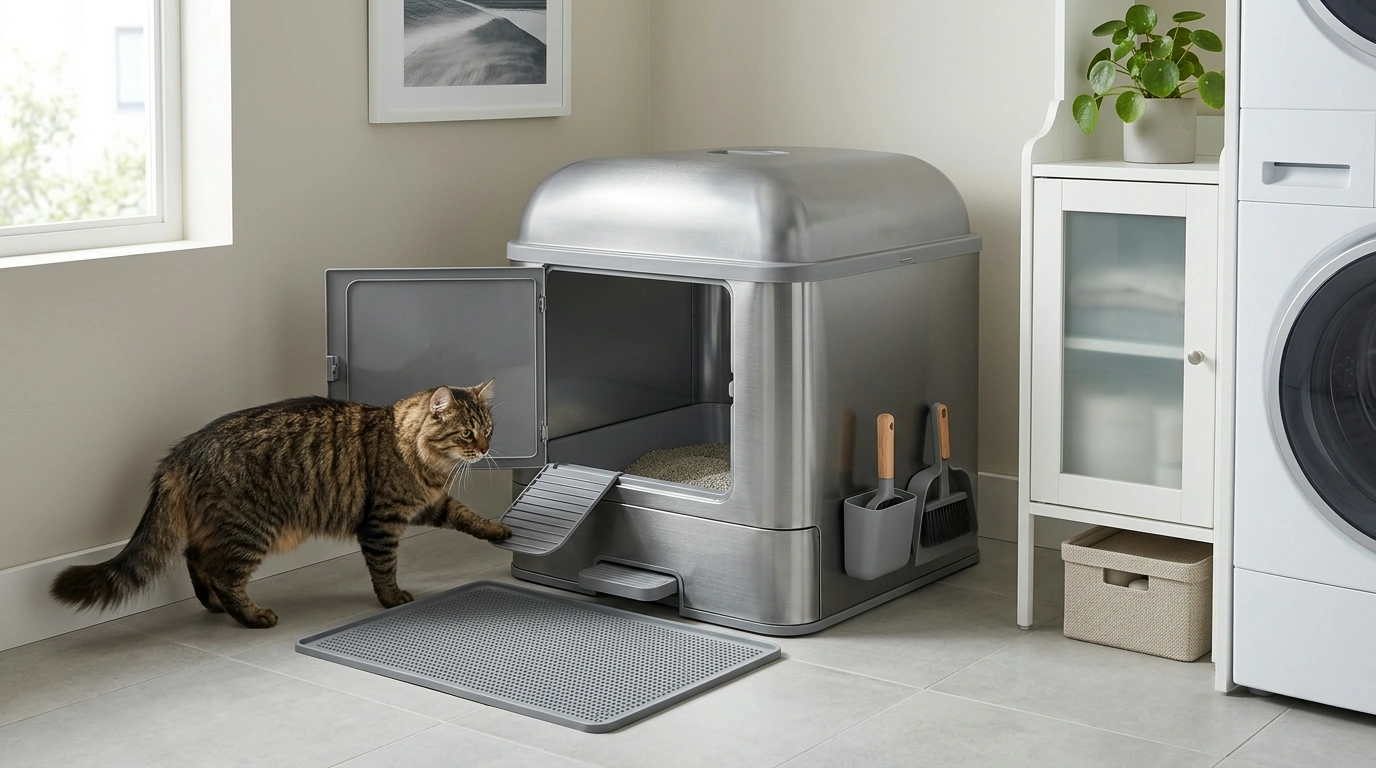
Closed Stainless Steel Cat Litter Box with Deodorizing Enclosure and Pedal: Cleaner Odor Control, Easier Daily Care
A covered stainless steel litter box with a deodorizing enclosure and foot pedal is built for households that want tighter odor containment, less litter scatter, and a more hygienic day-to-day routine. When the enclosure, steel pan, and pedal work together, you get a setup that’s easier to keep fresh without adding extra steps—especially helpful in apartments, smaller rooms, or multi-cat spaces. Below is a practical breakdown of what makes this design different, how to set it up for smooth acceptance, and how to keep performance consistent over time.
What Makes This Litter Box Different
- Closed enclosure: Helps contain airborne odor and loose litter, which can make a noticeable difference in compact living areas or busy multi-cat homes.
- Stainless steel pan: Resists absorbing smells and stains compared with many plastic pans, which can hold odor in scratches over time.
- Foot pedal access: Supports a hands-free flow for quick scooping and reduces contact with high-touch surfaces like lids, doors, and handles.
- Deodorizing enclosure support: Designed to assist odor management alongside the fundamentals—daily scooping and regular litter refreshes.
Why Stainless Steel Helps with Odor and Hygiene
Stainless steel is a strong upgrade for litter box hygiene because it’s non-porous and less likely to hold onto the sources of odor. With many plastic boxes, repeated use can create micro-scratches that trap residue; even when the box looks clean, smells can linger.
- Less odor buildup: A non-porous surface reduces the chance of lingering odor from absorbed urine or grime lodged in scratches.
- Cleaner rinsing: Stainless steel generally rinses more completely, so you’re less likely to leave behind detergent or cleaner scents that some cats dislike.
- Better durability with clumping litter: It typically holds up well against clump adhesion and repeated deep-clean cycles.
- Helpful for “high aim” or edge use: If your cat sprays or misses the center, cleanup is less likely to leave residual smell in the pan.
For more on litter box fundamentals (number of boxes, placement, and routine), see Cornell’s guidance on litter box management.
Deodorizing Enclosure: How It Works in Real Use
A deodorizing enclosure can make the space around the box more comfortable, but it works best when paired with consistent habits. Think of it as support—not a replacement—for scooping and litter changes.
- Dial in litter depth: Many cats do well with about 2–3 inches of litter, adjusted to your cat’s digging style and tracking tendencies.
- Replace deodorizing components on a schedule: If your enclosure uses a filter or cartridge, replacement timing depends on humidity, how many cats use the box, and the strength of odor in the room.
- Keep airflow pathways clear: Avoid blocking vents or sealing gaps with liners in a way that traps moisture. Trapped humidity can worsen odor and encourage clumping.
- Troubleshoot sudden odor spikes: If smell ramps up quickly, rule out a litter change, a relocation to a damp area, or health issues before assuming the enclosure stopped working.
If you’re seeing avoidance or accidents outside the box, the ASPCA’s overview of common litter box problems can help you narrow down likely causes.
Pedal Operation and Hands-Free Cleaning Flow
The foot pedal is most useful when it makes daily scooping feel faster and cleaner. A simple routine keeps it from becoming a “fussy” feature.
- Hands-free access: Use the pedal while holding your scoop and waste bag to minimize touching lids and doors.
- Introduce gently: Make sure the pedal returns smoothly and doesn’t startle your cat. Noise-sensitive cats may need a slower introduction.
- Wipe contact points: Dust and stray granules can collect around pedals and hinges—quick wipe-downs prevent gritty buildup.
- Transition option: If your cat hesitates, leave the lid open (or keep the pedal disengaged) for a short period, then reintroduce closed mode once your cat is confidently using the box.
Material and Design Comparison for Everyday Maintenance
| Option | Odor Retention Over Time | Ease of Deep Cleaning | Scratch/Stain Resistance | Best For |
|---|---|---|---|---|
| Closed stainless steel with deodorizing enclosure | Low when maintained; enclosure helps contain smell | High (rinseable, less porous) | High | Apartments, odor-sensitive homes, multi-cat routines |
| Closed plastic litter box | Medium to high over time (may absorb odors) | Medium (can hold stains/odor in scratches) | Medium to low | Budget setups, lighter weight needs |
| Open stainless steel pan | Low (material resists odor), but less containment | High | High | Cats that dislike enclosed spaces; easy monitoring |
| Open plastic pan | Medium to high over time | Medium | Low to medium | Simple setups; frequent replacement plans |
Setup Tips: Placement, Litter Choice, and Cat Acceptance
General cat care guidance from the American Veterinary Medical Association (AVMA) can also be helpful if you’re fine-tuning your home setup around comfort and hygiene.
Cleaning and Maintenance Checklist
Product Details and Where to Find It
- Closed Stainless Steel Cat Litter Box with Deodorizing Enclosure and Pedal (In stock, $224.82)
Related in-stock item
- AI Tools for Professional Editing Guide – Complete Digital Download (In stock, $12.99)
FAQ
Do cats prefer a closed litter box or an open one?
Preference varies by cat: some like the privacy of an enclosure, while others dislike confined spaces. A gradual transition with good ventilation and careful monitoring for avoidance behaviors usually works best.
How often should a deodorizing filter or insert be replaced?
Replacement depends on humidity, the number of cats, and how strong odors get between cleanings. Many households land in a “every few weeks to every couple of months” range, but it’s best to follow the product’s guidance and adjust based on real results.
Will stainless steel reduce ammonia smell compared to plastic?
Stainless steel is less porous than plastic, so it’s less likely to retain ammonia odors over time. Odor control still depends on daily scooping, litter choice, and periodic full cleanouts.











Leave a comment